Boiler Installation in Middlesex County, MA

Sized for the House, Not for What Was There Before

Opus installs and replaces gas and electric boilers across Middlesex County and the Merrimack Valley, out of North Billerica. Most of the boilers we take out were too big for the house to begin with, so we run a heat loss calculation before quoting anything. The permit, the inspection and hauling the old unit away are inside the written price. Annual service and no-heat calls sit with boiler service and repair.

Request Ticket
How Can We Help?
Customer Info
Who is this for?
Only used to confirm your request.
Customer Info
Your email
Only used to confirm your request.
Customer Info
Your phone or mobile number
Only used to confirm your request.
Visit Details
Where should the team go?
Final Note
Anything we should know?
Loading Form

Is It Time to Replace the Boiler?

How Long a Boiler Lasts

A cast iron boiler often runs 25 to 35 years, and a high-efficiency unit closer to 15 to 20. Age on its own isn’t the trigger. Five things together usually are.

It's past twenty and the repairs have started stacking up.

One repair on an old boiler is normal. Three in two winters is the boiler telling you something, and the money starts running the wrong way.

The gas bill climbed and nothing else changed.

An ageing boiler loses efficiency gradually, so the cost creeps rather than jumps. Compare a January bill to the same month three years back.

It short-cycles.

Fires, runs briefly, shuts off, fires again. Sometimes a control problem, often a boiler far larger than the house needs, and either way it wears the unit out faster.

Rooms that were always warm aren't.

Cold upstairs, cold at the end of a zone, radiators that take forever. The boiler may no longer be keeping up with what it once managed.

There's rust, or water where there shouldn't be.

Staining on the jacket, a damp patch under the sections, or a relief valve that keeps discharging. A cracked section is the end of the line on a cast iron unit.

None of that means replace it today.

A twenty-five year old boiler that’s running well and passing its annual service has no business being ripped out, and we’ll say so. The point is to choose the timing yourself rather than have a February morning choose it for you.

SUBMIT A FORM & REACH OUT

Most Boilers Around Here Are Oversized

Heat Loss and Boiler Sizing

This is the part of the job that decides whether you’re happy in five years, and it’s the part almost nobody sees.

The lazy way to size a boiler is to read the plate on the old one and order the same output.

That repeats whatever mistake was made last time, and in this housing stock the mistake was usually oversizing. It’s also been compounded since: the house that boiler was sized for probably had single-pane windows and no attic insulation.

A heat loss calculation works from the house instead.

Room by room, square footage, window area and type, insulation, ceiling height, how exposed the walls are. What comes out is what the building actually needs on the coldest day of the year, which is usually a good deal less than what’s down there now.

An oversized boiler costs you twice as much.

More up front, then every month after, because it satisfies the thermostat fast, shuts down, and fires again a few minutes later. That short-cycling is hard on the unit and inefficient in exactly the way a new boiler was supposed to fix.
It takes longer to quote a job this way. It’s also the difference between a boiler that fits and one that was guessed at.

Gas, Electric, Combi and Steam

High-Efficiency and Condensing Boilers

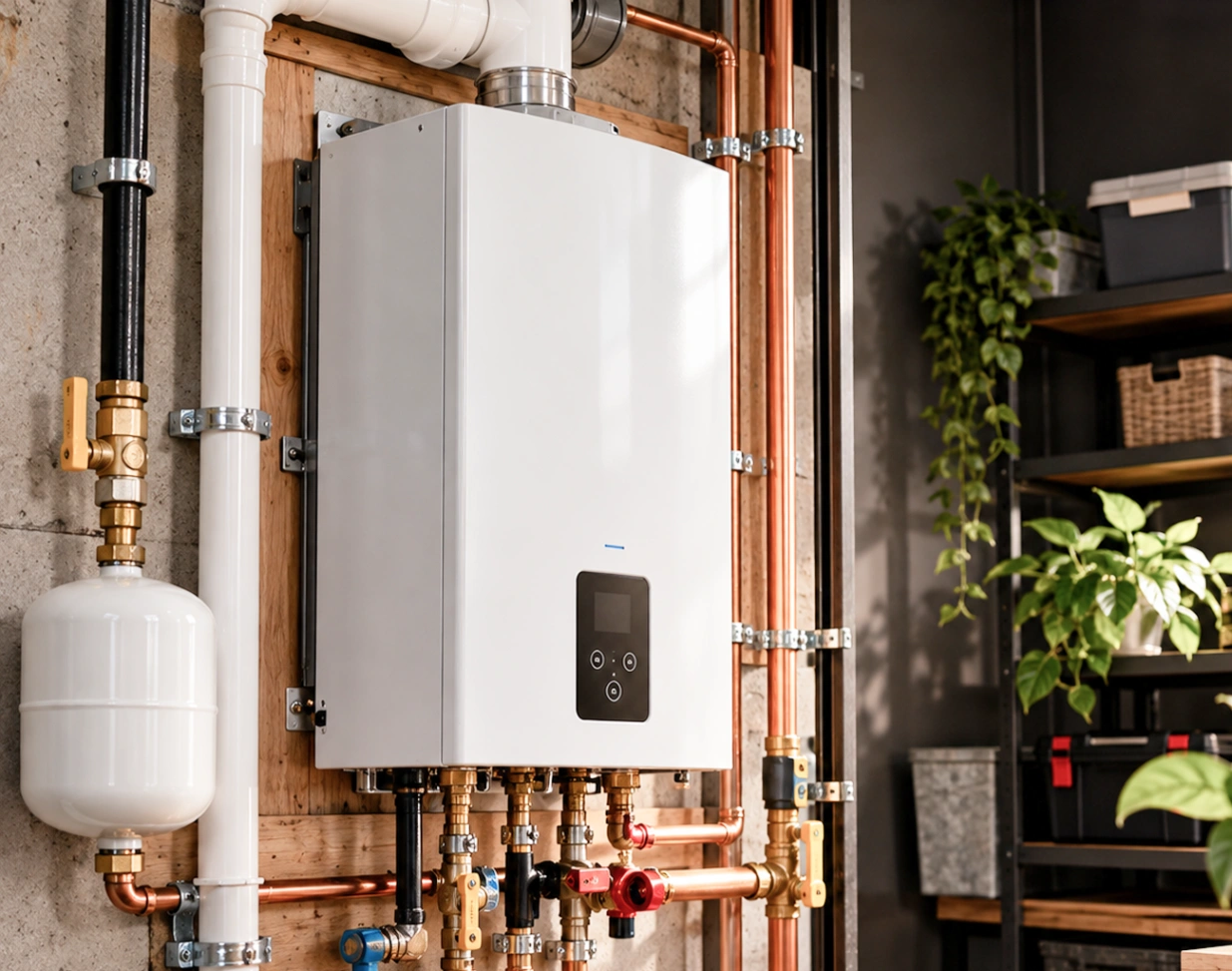
A condensing boiler pulls a second round of heat out of its own exhaust, which is where the efficiency comes from and why it vents in PVC through a side wall rather than up a chimney.

The catch is that it only condenses when the water coming back to it is cool enough.

On a system running high water temperatures through undersized baseboard, a condensing boiler spends the winter never doing the thing you paid for. We look at the emitters before recommending one, because the boiler and the radiators have to suit each other.

A conventional gas boiler is still the right answer in plenty of houses, particularly where venting is straightforward and the existing radiators want higher temperatures. Electric boilers make sense where there’s no gas on the street or venting would be difficult.

Steam is its own world.

One pipe and two pipe systems are common in the older towns here and most crews won’t go near them. We will, and replacing a steam boiler is a different calculation from a hot water one, sized on the radiation connected to it rather than on heat loss alone.

Combi Boiler vs Conventional

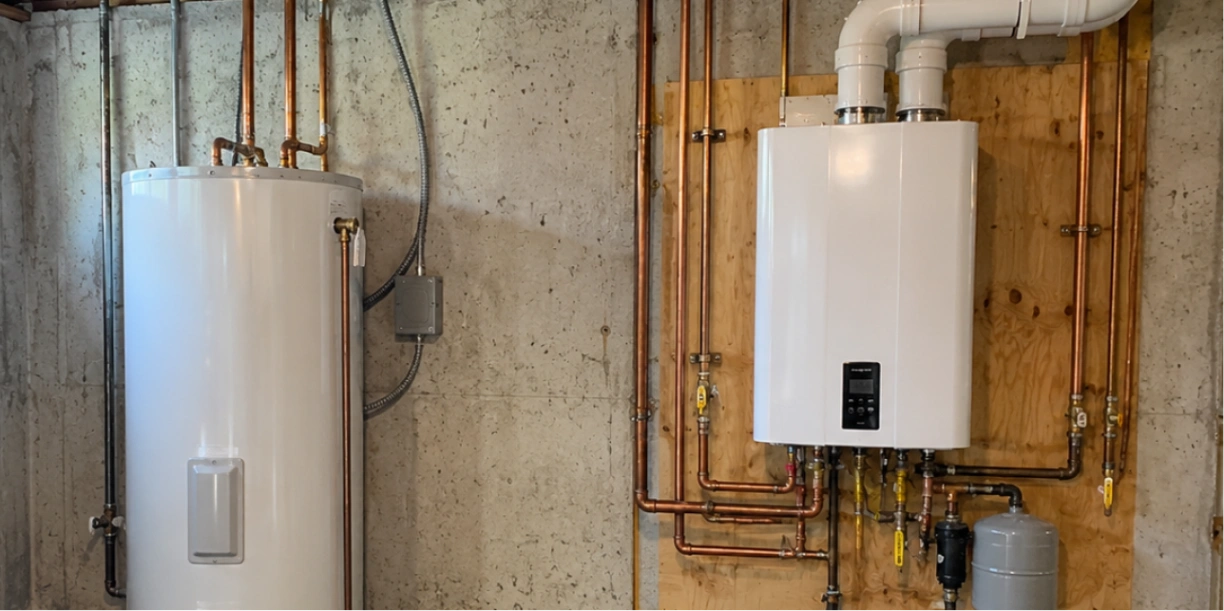
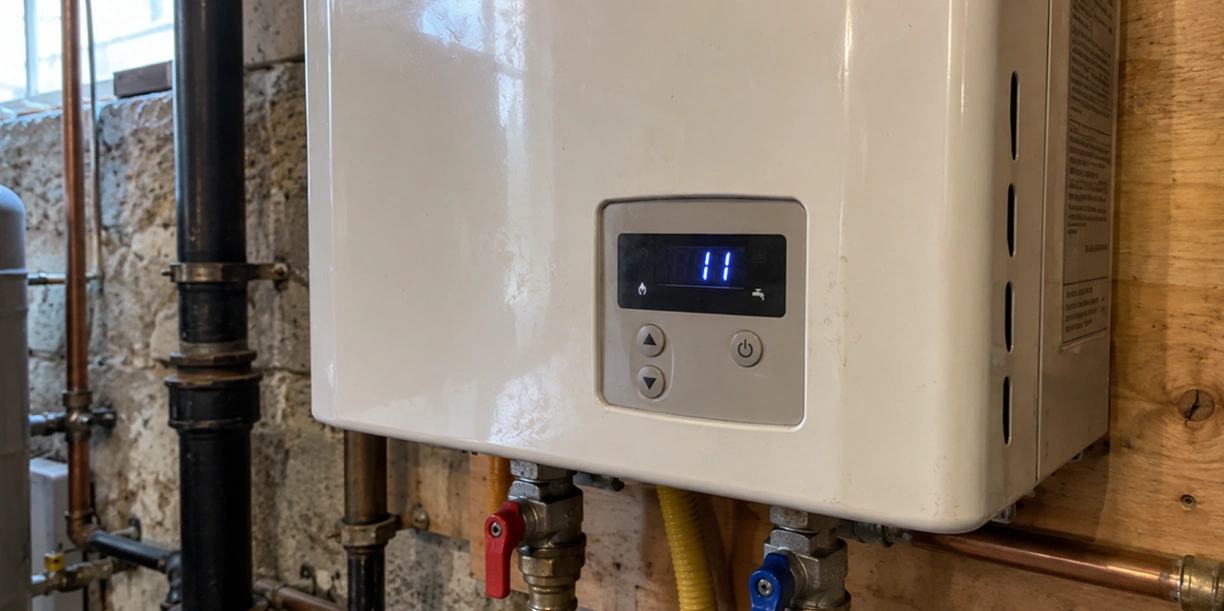
A combi does your heating and your hot water from one box, with no separate tank taking up floor space. Navien and other makers build them and they suit the right house very well.

The trade-off is hot water volume.

A combi heats on demand, so filling a large tub while somebody showers asks more of it than a tank would. In a house with one or two bathrooms it’s rarely an issue. In a larger house it can be.

The alternative worth knowing about is an indirect tank.

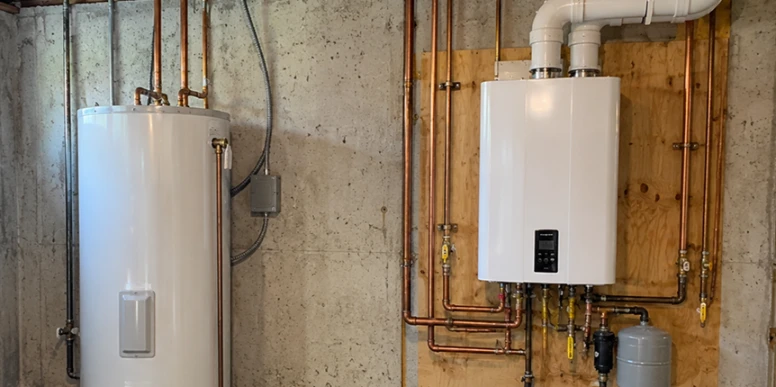
It’s a storage cylinder with no burner of its own, heated by the boiler through a coil, and it gives you tank-like volume with boiler efficiency. If you want endless hot water without changing the heating side at all, tankless water heaters are the other route.

The Part of the Bid You Can't See

Near-Boiler Piping and Venting

Two boilers of the same make and output can be installed well or badly, and the price difference between those two quotes is mostly here.


Near-boiler piping is the pipework immediately around the unit, and it decides how water moves through your system. Done properly, with the circulators and the air separation where the manufacturer specifies, the system runs quiet and every zone gets what it’s owed. Done as a straight swap onto whatever was there, you get noise, air, uneven heat and a boiler working harder than it should.


Venting is the other half, and on a condensing boiler it usually means abandoning the chimney and going out through a wall in PVC.


Which raises something a lot of quotes skip. If your gas water heater has been sharing that chimney, taking the boiler off can leave the flue far too large for the water heater alone.


Exhaust that should go up can spill back into the room instead. It’s a solvable problem, either by relining or by changing the water heater’s venting, but it has to be spotted at the quote rather than after. We check what else is on the flue before anyone prices a boiler.


Brands We Install

Weil-McLain and Utica are what Opus installs most often and what you’ll see on the trust strip. Both are long established, widely stocked in New England, and straightforward to get parts for a decade from now.


We also install and service Viessmann, Lochinvar, Buderus, Burnham and Navien combi units. If you have a preference, say so and we’ll tell you honestly whether it suits your system.


What we don’t do is oil. Gas and electric only. If your boiler burns oil we’re the wrong call, and we’d rather say that on the phone than send somebody who can’t help. We also don’t install forced-air furnaces or heat pumps for space heating, because hydronic is what this company does.


No manufacturer certification is claimed here. We install and service these brands, which is a different statement from holding a badge.

What Moves the Price

Boiler Installation Cost Drivers

We don’t publish figures, because a boiler number without your house attached to it is a guess, and every online estimate you’ve read is a best case. What actually decides it is knowable before we start.

What the heat loss says you need.

Output drives equipment cost, and a correctly sized unit is often smaller and cheaper than the one coming out.

Conventional, condensing or combi.

Efficiency, venting requirements and whether hot water is coming off the same unit all move in different directions.

How much has to change around it.

Near-boiler piping, new venting, a condensate drain, gas supply, and whether anything else is sharing the flue.

Steam or hot water.

A steam replacement is a different job with different sizing, and fewer people in this area will take it on.

What doesn’t move it is the calendar. The permit, the town inspection and hauling the old unit out are inside the quoted number, not added later. A boiler is one of the larger jobs a house needs, so monthly payments through financing are worth understanding before you decide, and there’s $50 off a first job through our special offers.


If the heat is off right now and it’s freezing, don’t wait on a replacement quote. That’s 24/7 emergency plumbing, and it gets treated as urgent whatever the hour. Every town runs its own inspector and its own schedule, and we pull the permit in all fourteen across our service areas.

The Boiler Standard

Boiler Work Is the Job We Take First

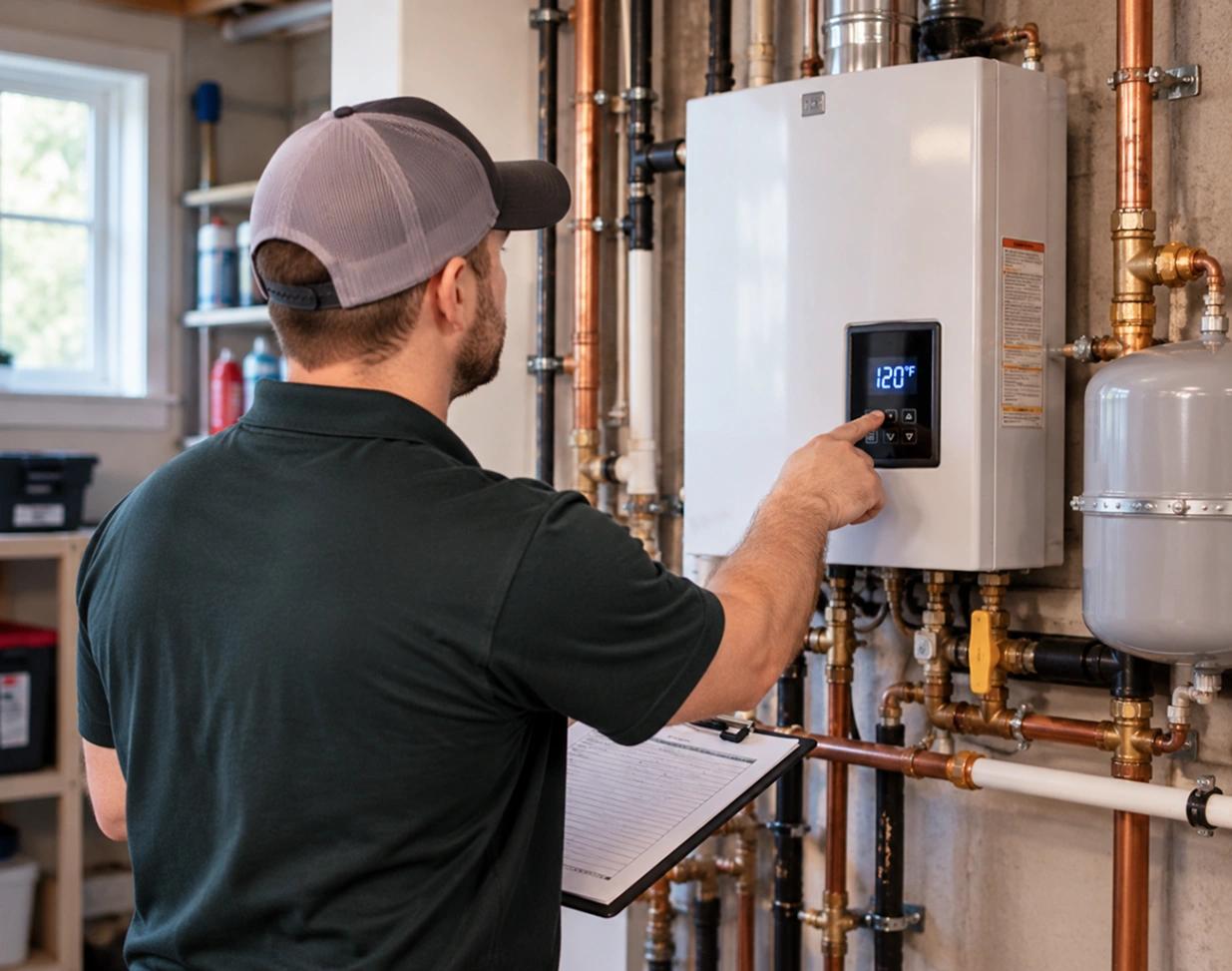
A lot of crews would rather pull your boiler out and sell you a new one than actually work on it, and plenty won’t touch steam at all. Boilers are our first call, not our last. Rick sizes, installs and commissions them himself, steam systems included, and when yours still has years left in it you’ll hear that instead of a quote. That’s the awkward part of selling boilers. Sometimes the honest answer is that you don’t need one. He spent close to 20 years on New England systems, most of it union, working the same houses these boilers are sitting in today.

Our Customer Feedback

Questions Billerica Homeowners Ask Us

“Clear answers. One written price. You decide before we start.”
Ricky Greene

Owner & Master Plumber

How much does a new boiler cost?
We won’t put a figure on a house we haven’t seen, and any number you find online is a best case. What moves it is the output your heat loss calculation calls for, whether you go conventional, condensing or combi, how much piping and venting has to change, and whether it’s steam or hot water. You get one flat written price covering all of it before anything starts.
Cast iron often runs 25 to 35 years, high-efficiency closer to 15 to 20, both assuming annual service. Past twenty, the question stops being age and becomes how often it’s failing and what a year of running it costs compared with a new one.
A combi gives you heating and hot water from one box and frees up the floor space a tank takes. The limit is simultaneous demand, so a larger house with several bathrooms may be happier with a conventional boiler and an indirect tank. Bathroom count and how you use hot water decide it more than anything else.
Yes, and only a licensed plumber can pull it. The job is inspected afterwards and you should end up holding a signed card. Ours is priced into the quote rather than billed separately, and an unpermitted install can follow you into an insurance claim or a house sale.
Yes, one pipe and two pipe both. Steam is common in the older towns here and plenty of local outfits won’t quote it. Sizing works differently, off the radiation connected to the system rather than heat loss alone, which is one reason it gets avoided.
“Clear answers. One written price. You decide before we start.”
Ricky Greene

Owner & Master Plumber

The Towns We Cover Across Middlesex County

Opus runs out of North Billerica and covers roughly a 20-mile radius, from the older neighborhoods of Woburn and Winchester to the affluent, boiler-heavy homes in Concord, Carlisle, and Lincoln. If your home is within about 20 miles, we most likely cover you.

Tips for Keeping Your Water Hot and Your Basement Dry

It’s about to get cold

Which pipes freeze first, what to do in October so they don’t, and what to do at two in the morning if one already has. Frozen and burst pipes  covers all of it.

You think something’s leaking

Stains, a meter still ticking with every tap shut off, a warm patch of floor. Leak detection finds where the water is actually coming from before anybody opens a wall.

Your boiler needs looking at

How often hot water and steam systems want servicing, what the annual visit includes, and which noises are worth calling about. Boiler service and repair  answers all three.

SUBMIT A FORM & REACH OUT