Sump Pump Installation in Middlesex County, MA

The Machine You Only Notice When It Stops

Sump pumps and sewage ejector pumps are two of the plumbing services Opus runs out of North Billerica, across Middlesex County and the Merrimack Valley. A sump pump spends years doing nothing visible and then earns its entire cost in one night. If your basement is wet right now, that’s 24/7 emergency plumbing. If you’re reading this in September, you’re doing it the sensible way round.

Request Ticket
How Can We Help?
Customer Info
Who is this for?
Only used to confirm your request.
Customer Info
Your email
Only used to confirm your request.
Customer Info
Your phone or mobile number
Only used to confirm your request.
Visit Details
Where should the team go?
Final Note
Anything we should know?
Loading Form

Do You Actually Need a Sump Pump?

When a Basement Needs One and When It Doesn't

Not every house does, and we’re not going to tell you otherwise to sell a pump. Five things point toward one.

Water has come in before.

Once is a data point, twice is a pattern. If there’s a tide line on the foundation or a history of wet corners after heavy rain, the water is finding a way in and will keep doing it.

There's already a pit but no pump, or a pump that predates you.

Somebody put that pit there for a reason. An empty one, or one with a pump nobody has ever tested, is worth sorting before you need it.

The basement is finished, or about to be.

The calculation changes completely once there’s flooring, drywall and belongings down there. A pump is cheap against what a few inches costs you.

Spring thaw is when it shows.

Frozen ground, then rapid melt, then a saturated water table with nowhere to go. March finds cracks that were invisible in August.

The ground slopes toward the house.

Grading and gutters push water at the foundation and no pump fixes that at source. It does manage the consequence.

Worth being clear about what a sump pump is not.

It doesn’t stop water entering your basement. It moves water that has already entered. If the cause is grading, gutters or a failing foundation, that’s waterproofing and excavation work, a different trade from ours, and a pump alone is treating the symptom. We’ll say which one you’re looking at.

SUBMIT A FORM & REACH OUT

The Pump Fails the Night the Power Does

Battery Backup Sump Pumps

The storm that fills your sump is the same storm that takes out the power. That isn’t bad luck, it’s the same weather, and it’s the single biggest gap in most setups.


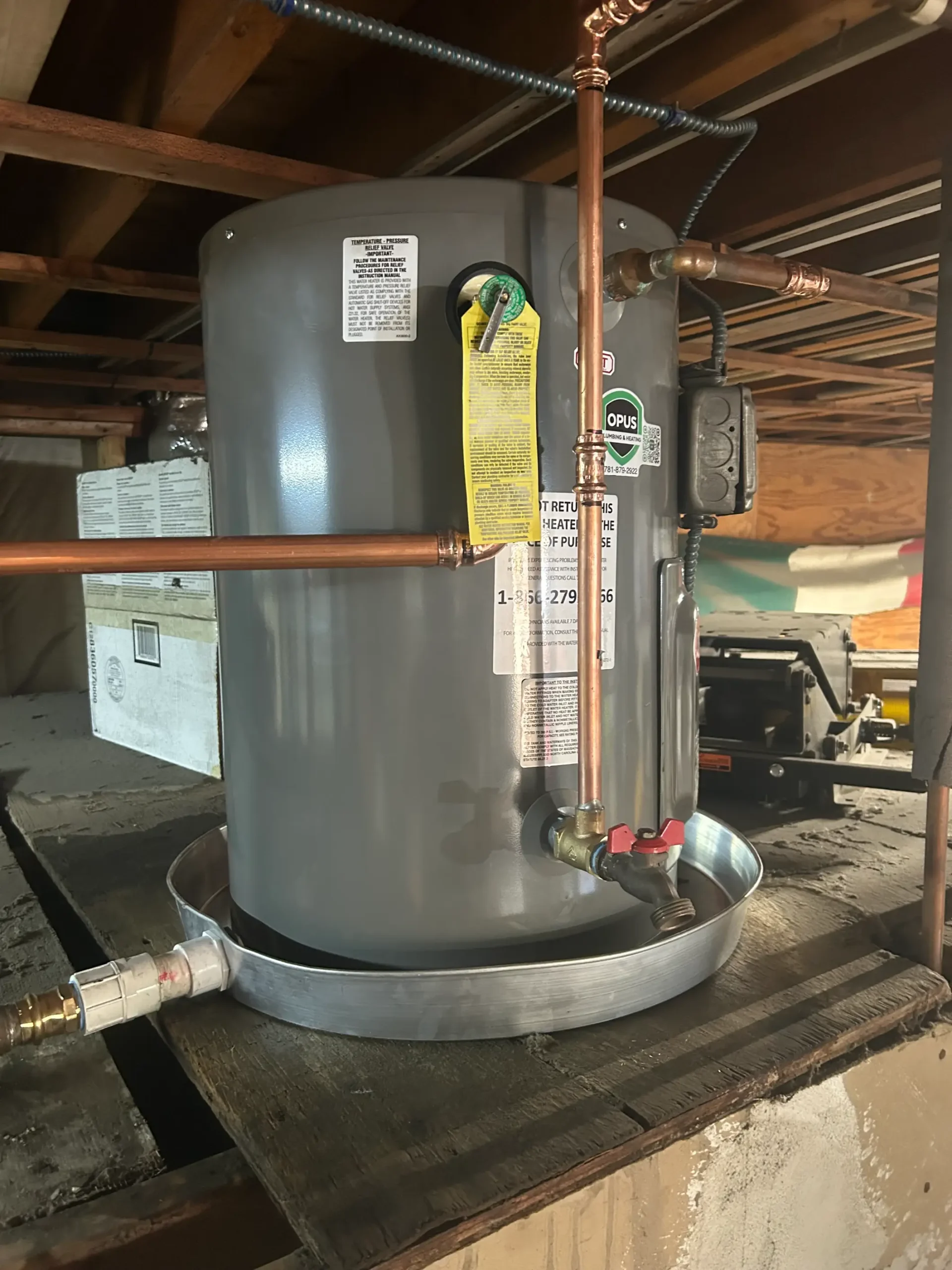
A battery backup is a second pump with its own power source, sitting in the same pit at a slightly higher level. Mains pump fails or power drops, the backup takes over. It buys you hours rather than days, which is normally exactly what’s needed.


It also covers the failure nobody plans for, which is the primary pump dying quietly on a Tuesday while you’re at work. A backup with an alarm tells you. A single pump just stops.


If your basement is finished, this is the part of the job worth spending on. If it’s a bare cellar with a washer and a boiler, it’s a reasonable thing to decline, and we’ll price it as an option rather than bundling it in.

Sump Pumps and Ejector Pumps Are Not the Same Machine

Sewage Ejector Pumps for Basement Bathrooms

People use the names interchangeably and they do completely different jobs. Getting the wrong one fitted is an expensive mistake.

A sump pump moves groundwater.

Clean water collecting in a pit below the floor, pumped outside and away from the foundation.

A sewage ejector pump moves waste.

If you have a bathroom, laundry or kitchen sink below the level of the main drain, the waste can’t flow out by gravity. An ejector pump sits in a sealed basin, grinds or passes solids, and lifts it up to the building drain.

The differences matter.

An ejector basin is sealed and vented, because it contains sewage gas. It handles solids a sump pump would jam on instantly. And it fails differently, usually with a smell or a backup at the lowest fixture rather than water on the floor.
We install, repair and replace both. If you’re adding a basement bathroom, the ejector pump and its venting want designing in at the start rather than solved afterwards.

We Test the Float, Not Just the Pump

Sump Pump Repair and Maintenance

A pump that hums when you plug it in is not a pump that works. Four things get checked, and the pump itself is only one of them.

The float switch.

This is what fails first, more often than the motor. It sticks, it snags on the pit wall, or the tether wraps on the discharge pipe. We lift it by hand and by filling the pit, because those two tests don’t always agree.

The check valve.

Stops pumped water falling straight back down the pipe into the pit. When it fails the pump cycles repeatedly on the same water, which wears it out fast. You can often hear it as a clunk after each cycle.

The pit itself.

Silt and gravel accumulate and shorten the life of an impeller. The lid matters too, keeping debris out and cutting the humidity a lidless pit pushes into your basement air.

A live cycle under load.

Fill it and watch it run, rather than testing a pump by whether it makes a noise. Pumps more often fail from sitting unused and seizing than from working hard.

Annual testing takes minutes and is best done in autumn, well ahead of the thaw rather than during it. Members pay less for it under our maintenance plan.

Where the Water Goes After the Pump

Discharge Lines, Check Valves and Freezing

Everything above the pit gets less attention than the pump and causes as many failures.


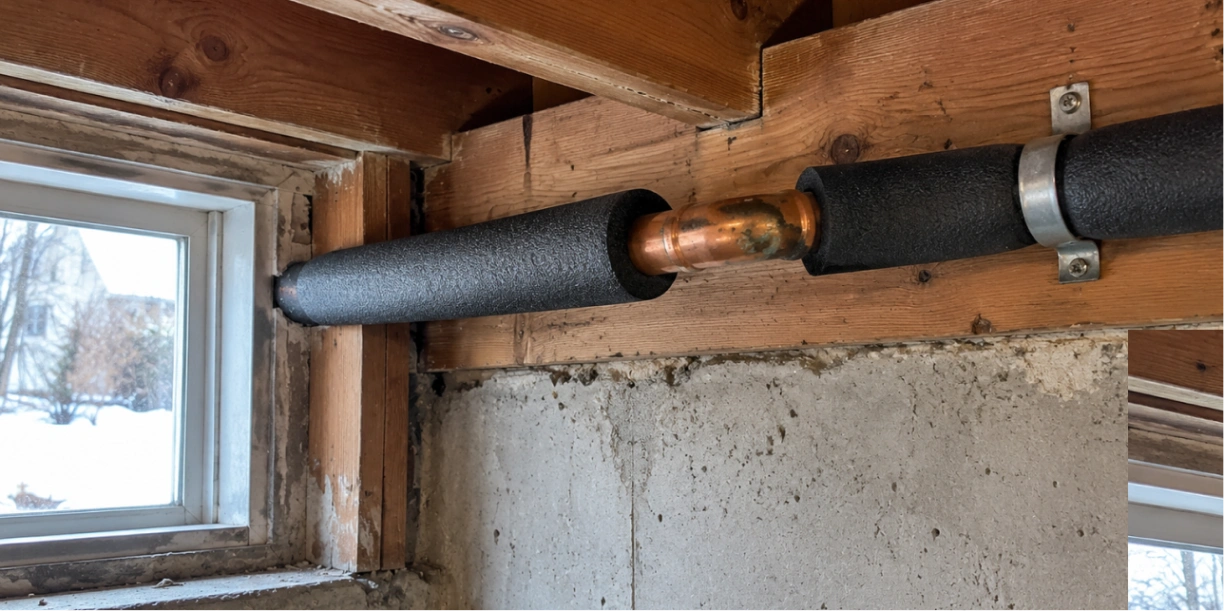
Discharge has to end far enough from the house that the water doesn’t simply run back to the foundation and return through the same crack. A line that stops at the wall is a pump moving the same water in a circle.

The New England problem is ice.

A discharge line that freezes in January leaves the pump running against a closed pipe. It can’t move water, it doesn’t know that, and it runs until it burns out. Then the thaw arrives and there’s no pump. Line pitch, the exit point, and fitting a relief arrangement all matter here, and it’s the thing most commonly done badly.

One code point worth knowing.

Sump discharge doesn’t go into your sanitary sewer. Towns around here prohibit it, because clean groundwater in the sewer system is everybody’s problem when it rains. If yours is plumbed that way, we’ll tell you.

And a limit.

We run and repair the discharge line above grade and through the rim. We don’t dig, so a buried discharge run to a distant outlet is excavation work and a different contractor. Basement and floor drains, which often come up in the same conversation, sit on drain cleaning.

Most Pumps Give Out Around Year Eight

Sump Pump Replacement and What It Costs

Seven to ten years is the usual range for a primary pump, less if it runs constantly, more if it barely cycles. Battery backups are also governed by their battery, which wants replacing on its own schedule regardless of how the pump is doing.


Replace before it fails rather than after, because the replacement always costs the same and the flooded basement doesn’t. A pump at year nine that’s still working is a planned job. A pump at year nine during a storm is an emergency call and a wet floor.


On cost, we don’t publish figures, because the number depends on your basement rather than on an average. What moves it is whether a pit already exists, primary pump versus a backup system, whether the discharge run has to be rebuilt, whether an ejector basin and venting are involved, and whether power is already at the pit. All knowable before we start, which is why you get one flat written number rather than an hourly clock, and the same figure applies in all fourteen towns across our service areas whether you’re ten minutes out or at the far edge. There’s $50 off for new customers on a first job.


The Clean House Promise

Basement Work Without the Trail

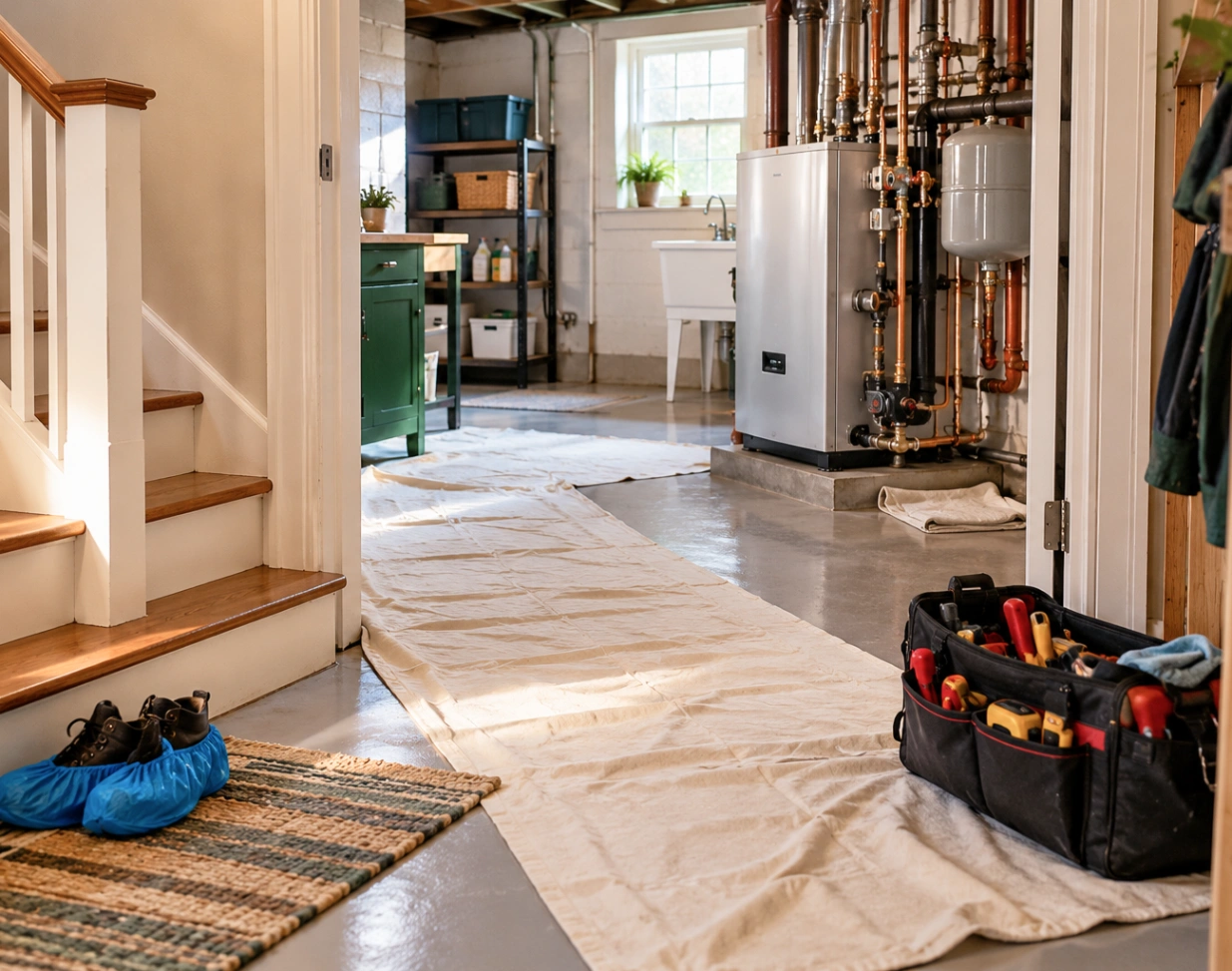
Pit work is wet, silty work at the bottom of your cellar stairs, and the old pump comes back up those same stairs dripping. Booties go on at the door, every visit, including the ten-minute ones. Drop cloths go down along the route before anything is carried, not just under the pit. The old pump leaves in our truck, bagged, rather than sitting by your bins. Before we pack up, the floor where we stood and the stairs we used get wiped. When we pull out, you should be able to tell what we fixed and nothing else.

Our Customer Feedback

Questions Billerica Homeowners Ask Us

“Clear answers. One written price. You decide before we start.”
Ricky Greene

Owner & Master Plumber

How long do sump pumps last?
Seven to ten years for a primary pump, shorter if it runs frequently. Battery backups depend on their battery as well, which has its own replacement schedule. Once a pump is past eight, replacing it on a dry Tuesday is a far better experience than replacing it during a storm.
Most often the float switch rather than the motor, and floats stick, snag on the pit wall or catch on the discharge pipe. After that, a failed check valve makes it cycle on the same water, or a frozen or blocked discharge line leaving it running against a closed pipe. Worth checking the breaker before anything else.
If the basement is finished, or you’d lose anything you’d mind losing, yes. The storm that fills your sump is usually the storm that takes the power out, so a mains-only pump is offline exactly when it matters. In a bare cellar it’s a reasonable thing to skip, and we’ll price it separately rather than bundle it.
A sump pump moves groundwater out of a pit. An ejector pump moves waste up from a bathroom or laundry below the main drain, in a sealed and vented basin, and handles solids. Different machines for different problems, and one can’t do the other’s job.
Not the buried part. We handle discharge above grade and through the rim, but excavation is a different trade and not one we take on. We’ll tell you where our part ends before booking rather than after.
“Clear answers. One written price. You decide before we start.”
Ricky Greene

Owner & Master Plumber

The Towns We Cover Across Middlesex County

Opus runs out of North Billerica and covers roughly a 20-mile radius, from the older neighborhoods of Woburn and Winchester to the affluent, boiler-heavy homes in Concord, Carlisle, and Lincoln. If your home is within about 20 miles, we most likely cover you.

Tips for Keeping Your Water Hot and Your Basement Dry

It’s about to get cold

Which pipes freeze first, what to do in October so they don’t, and what to do at two in the morning if one already has. Frozen and burst pipes  covers all of it.

You think something’s leaking

Stains, a meter still ticking with every tap shut off, a warm patch of floor. Leak detection finds where the water is actually coming from before anybody opens a wall.

Your boiler needs looking at

How often hot water and steam systems want servicing, what the annual visit includes, and which noises are worth calling about. Boiler service and repair  answers all three.

SUBMIT A FORM & REACH OUT